Ethiopia
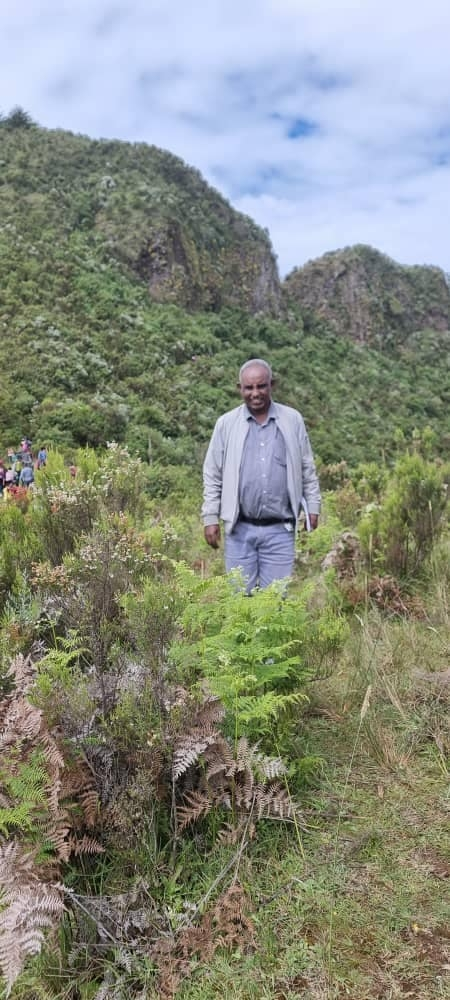
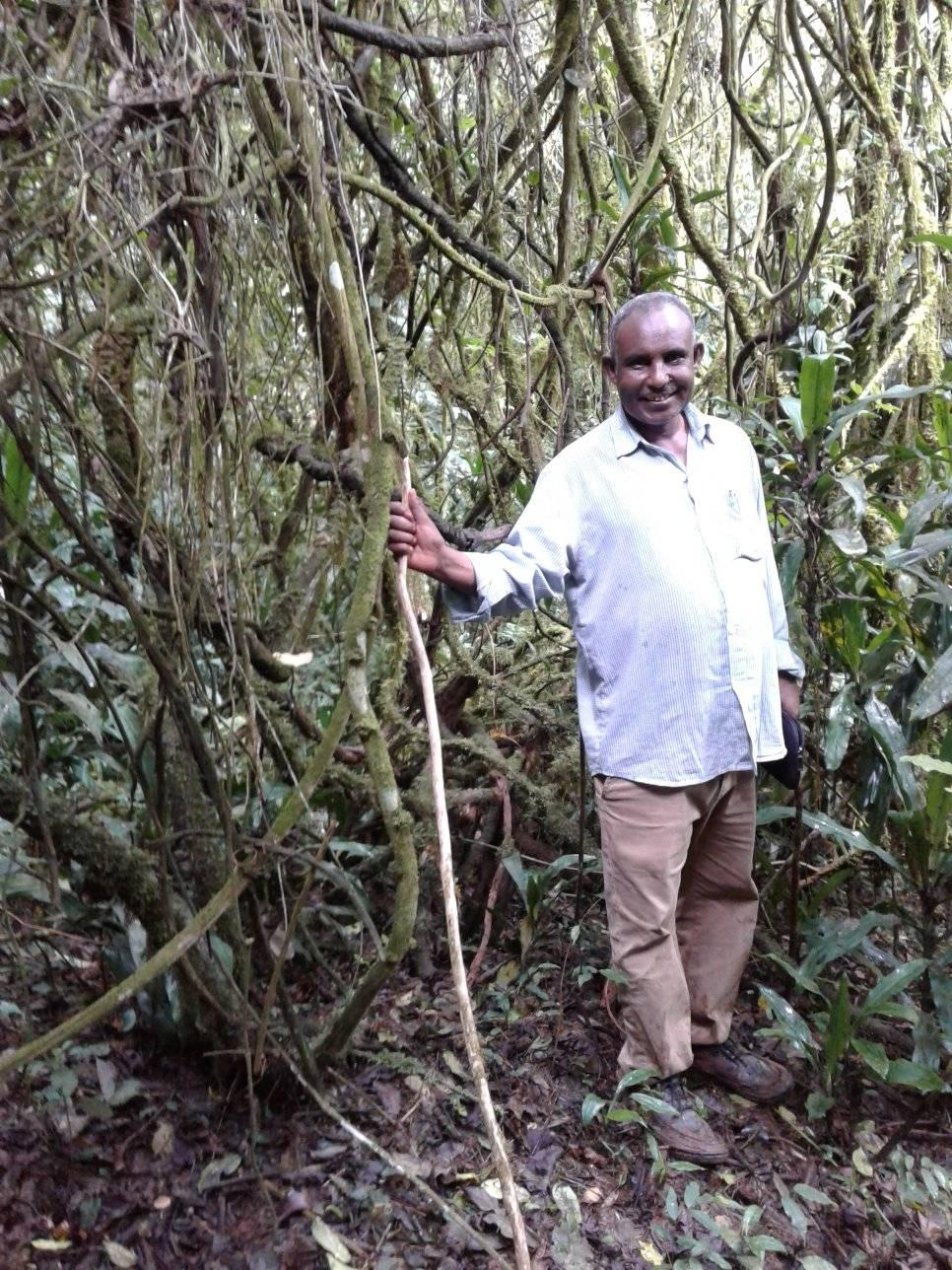
Professor Kitessa Hundera is a leading expert on the sustainable growth of the Arabica coffee plant
About Ethiopia
Ethiopia is a landlocked country located in the Horn of Africa region of East Africa. It shares borders with Eritrea to the north, Djibouti to the northeast, Somalia to the east, Kenya to the south, South Sudan to the west, and Sudan to the northwest. Source: Wikipedia
Ethiopia's main environmental issues center on severe land degradation, deforestation, water scarcity, and biodiversity loss, all intensified by climate change, which brings extreme droughts, floods, and unpredictable rainfall, devastating rain-fed agriculture and displacing communities.
These problems fuel food insecurity, poverty, and conflict, with significant impacts on livelihoods, ecosystems, and economic stability, though the government is implementing restoration efforts like the Green Legacy Initiative
In this program they are aiming to combat deforestation and climate change by planting billions of trees annually in urban and rural areas, significantly boosting forest cover and restoring ecosystems
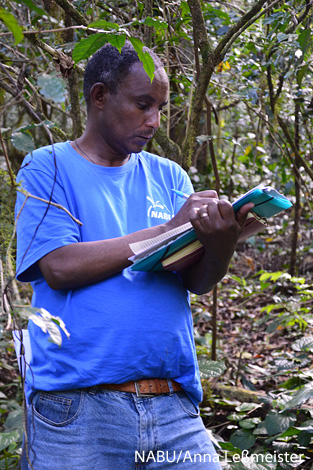
About Professor Kitessa Hundera
Kitessa was born and raised in the countryside in South West Ethiopia surrounded by dense forests where wild edible fruits were abundant, and were widely enjoyed by everyone.
Later on, driven by high population increase, the demand for additional farmland led to the destruction of these forests and the medicinal plants and wild edible fruits are now scarce.
Academically, Kitessa studied forest ecology both at MSc and PhD level, and started campaigning for the preservation of these forests, which are the centre of origin and diversity of the Arabica coffee plant, the most popular coffee in the world.
Coffea arabica shrubs are indigenous to the understorey of the moist evergreen Afromontane rainforest of Ethiopia. Semi-forest coffee is harvested from semi-wild plants in areas of the forest where farmers thin the upper canopy and annually slash the undergrowth. This traditional method of coffee cultivation is a driver for preservation of indigenous forest cover, differing from other forms of agriculture and land use which tend to reduce forest cover. Kitessa has researched and published about this more sustainable method of agriculture
Kitessa has also studied the diversity of coffee plants in the rainforest and published on the importance of maintaining the arabica gene pool. He has written on the non-diverse genetic make up of commercially harvested Arabica, emphasising that maintaining the genetic diversity in the rainforest arabica is essential to survive future threats such as those of climate change, pests and diseases
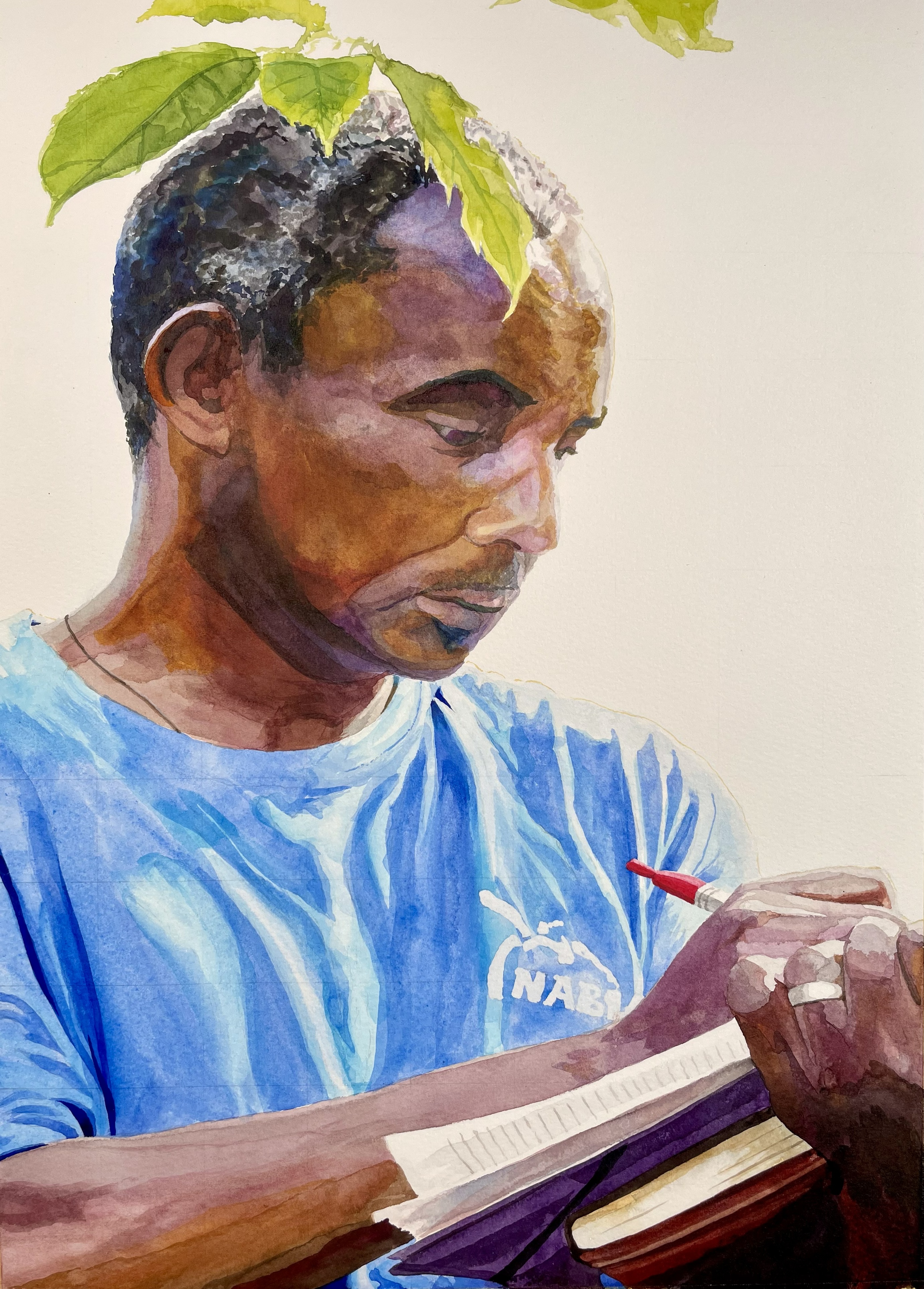
Watch the portrait's story
This video shows the painting process, and tells some of Professor Kitessa Hundera's story.